-Beginning of semester peer-feedback
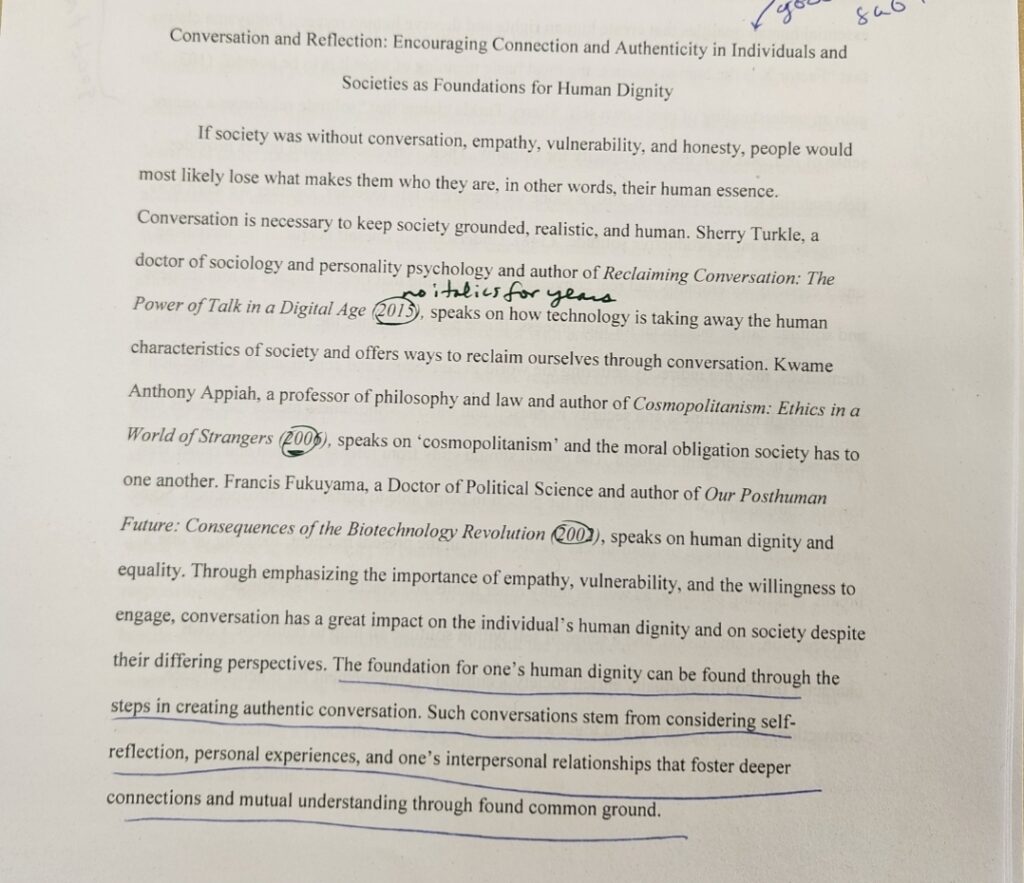
-End of semester peer-feedback
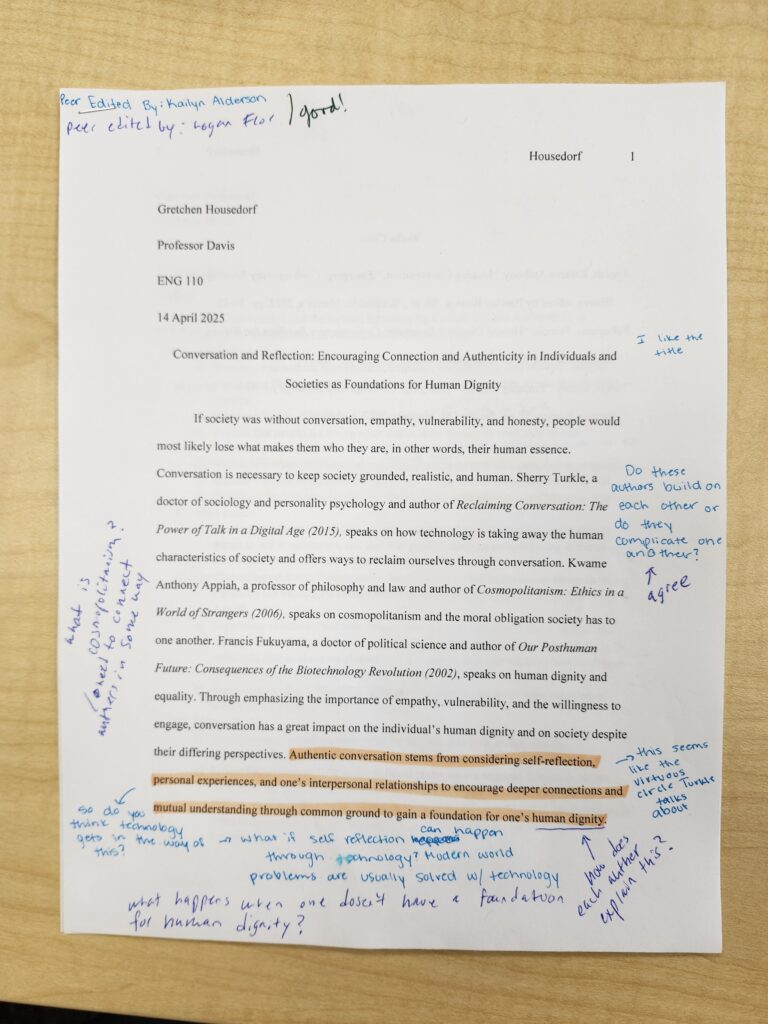
Throughout this course, I believe that I have improved my peer edits. In the course description, learning outcome #4 states that students should “Be able to critique their own and others’ work by emphasizing global revision early in the writing process and local revision later in the process.” In this course, students should identify changes for improving their own or others’ writing. For first drafts, they should suggest organizational improvements and adjustments to information or evidence. For later drafts, they should recognize word choices, sentence structures, spelling, and punctuation errors. At the beginning of this course, when doing peer editing, I feared I would make the wrong suggestion, or the person would not like it. This fear made me very hesitant in critiquing and editing others’ drafts, thus, I only made suggestions that I was confident in, with these usually being global-level suggestions. An example of this can be seen in the first image above, where I made a few broad suggestions for my peer’s draft but avoided making local-level revision suggestions.
Compared to the beginning of the semester, I am now through much practice improved my ability to provide peer feedback. This improvement is demonstrated in the second image above. The author’s thesis or argument was broad, so I suggested condensing it and making it more concise because the thesis guides the reader through their paper. Another improvement in my peer-edited work is again shown in the second image. I suggested that the author further integrate and relate the different texts together to further support their thesis. Through my peer editing, I tried to help pose any supporting questions and identify errors to help with both global and local revisions.
